
ROYAL FAMILY
This is disturbing. What exactly are we looking at here? Prince Harry, a private citizen and NON-WORKING royal, seated at the European Parliament, shaking hands with officials and looking every bit like he’s conducting official royal business. At what point does advocacy become royal cosplay? And why does he continue to be given a platform that creates this impression?….

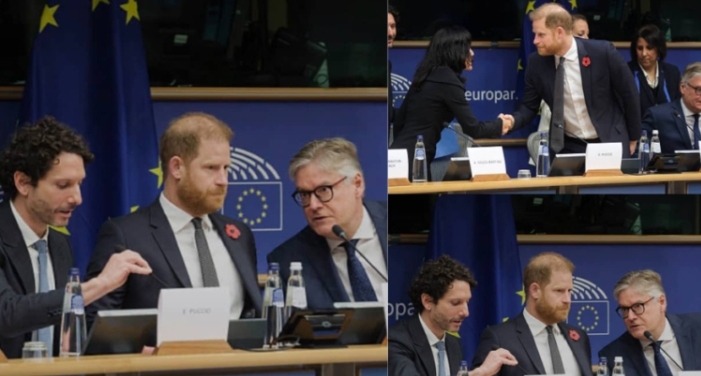
This is disturbing. What exactly are we looking at here? Prince Harry, a private citizen and NON-WORKING royal, seated at the European Parliament, shaking hands with officials and looking every bit like he’s conducting official royal business. At what point does advocacy become royal cosplay? And why does he continue to be given a platform that creates this impression?
Is he a diplomat? NO. Is he representing the British government or the monarchy? NO.
Yet here he is, seemingly playing the part of a working royal on the international stage.
Harry stepped away from royal duties. He doesn’t get to have it both ways.
At what point does advocacy become royal cosplay? And why does he continue to be given a platform that creates this impression?
STRIP THE DAMN TITLES!
### Prince Harry’s European Parliament Appearance Sparks Fresh Royal Controversy: Questions Grow Over His Role, Titles and Life Outside the Monarchy
Prince Harry’s continued public appearances on the international stage have reignited a debate about his relationship with the British monarchy, his decision to step away from official royal duties, and the privileges that still come with being a member of the Royal Family.
For critics, his appearance at the European Parliament raises an uncomfortable question: where exactly does Prince Harry’s private advocacy end and the public image of royal representation begin?
The Duke of Sussex stepped back from his position as a senior working royal in 2020, choosing to build an independent life with Meghan Markle in the United States. The decision marked a significant turning
point for the monarchy, ending his participation in the traditional structure of official royal duties.
Yet his royal identity has remained central to his public profile.
### A Private Citizen or a Royal Representative?
The controversy is not simply about Prince Harry attending an international event. It is about the symbolism attached to his presence.
Photographs and footage from Brussels showed Harry meeting European officials, including European Parliament President Roberta Metsola, participating in discussions and delivering a keynote address. Meghan Markle also accompanied him, although she ultimately withdrew from her planned speech. Euronews +2
For royal critics, the setting matters.
The European Parliament is an important political institution, and an appearance there naturally attracts attention. When someone with a royal title enters such an environment, poses with senior officials and receives an international platform, observers may interpret the occasion as carrying a degree of royal significance, even when the engagement is private advocacy.
But there is an important distinction: Harry was not representing the British government, conducting diplomatic negotiations or carrying out an official assignment on behalf of King Charles.
His appearance was connected to his campaigning work on online child safety, not an official British royal engagement.
That distinction, however, has done little to prevent the debate over the public perception of his role.
### The Royal Title Question Refuses to Disappear
One of the biggest sources of frustration among royal commentators is the continued use of Harry’s royal identity.
When Harry and Meghan announced their decision to step back from royal duties in January 2020, Buckingham Palace confirmed that they would no longer be working members of the Royal Family and would not use their HRH styles.
However, Harry remains a prince and the Duke of Sussex. Those titles were not automatically taken away when he left official royal duties. The Royal Family +1
This creates a complicated situation.
On one hand, Harry has the freedom to pursue
charitable projects, campaign for causes he believes in and establish an independent professional identity.
On the other hand, his royal titles remain part of his public identity, giving his appearances a level of recognition that an ordinary private citizen might not receive.
Critics argue that this arrangement allows him to maintain the benefits of royal recognition without accepting the responsibilities traditionally associated with working royal life.
Supporters, however, would argue that stepping away from royal duties does not mean surrendering the right to participate in international advocacy.
### Why Is the European Parliament Giving Him Such a Platform?
This is another question attracting attention.
Harry’s appearance was connected to the Lost Screen Memorial, an installation honouring children and young people who died following online harms. The event brought together families affected by online abuse and campaigners seeking stronger protections for children.
Harry used his speech to challenge technology companies over online safety, transparency and the treatment of grieving parents seeking information about their children’s accounts and devices.
The subject itself is serious and deserves public attention.
Nevertheless, critics are questioning why a former working royal continues to receive such prominent international invitations and whether organisers fully appreciate the public perception surrounding his royal status.
There is a difference between inviting Harry because of his advocacy work and presenting him as though he were an official representative of the British monarchy.
The European Parliament appearance does not establish that the institution considers him a British diplomatic representative. But it does demonstrate how his royal identity continues to attract international attention.
### King Charles and the Monarchy Face an Uncomfortable Question
Harry’s relationship with the Royal Family has been the subject of years of public disagreement, particularly following his departure from official royal duties and his subsequent interviews, documentaries and public statements.
For the monarchy, the challenge is maintaining a clear distinction between official royal responsibilities and the independent activities of former working members.
King Charles continues to represent the monarchy through constitutional and ceremonial duties. Prince William is also preparing for his future responsibilities as heir to the throne.
Harry, meanwhile, has chosen a different path.
The difficulty is that the public may still associate him with the institution he stepped away from, particularly when he appears at prestigious international venues.
Whether that association is fair or not, it is an unavoidable consequence of his continued royal identity.
### Should Prince Harry Give Up His Royal Titles?
The demand to strip Harry of his titles has resurfaced among critics who believe his current position creates confusion about his relationship with the monarchy.
Some argue that if he genuinely wants to operate independently, relinquishing his remaining royal titles would remove much of the controversy.
Others believe his titles are part of his birth and family history, and that leaving royal duties should not automatically require him to surrender them.
There is also a legal distinction between the titles he holds and the HRH style he agreed not to use. Removing a royal title is not simply a matter of public criticism; it involves constitutional and legal considerations. House of Commons Library
Ultimately, the debate is about more than a handshake, a photograph or a speech in Brussels.
It concerns the boundaries between private advocacy, royal heritage and public representation.
Prince Harry has the right to pursue his independent causes, but the public also has the right to question how his royal identity is used and understood.
The central question remains: if Harry no longer performs official royal duties, how should his international engagements be distinguished from those of working members of the monarchy?
And should the royal family reconsider the way its titles and public identity are managed?
The European Parliament appearance has brought those questions back into the spotlight, and the debate is unlikely to disappear anytime soon.

Prince William and Kate Middleton Enjoy a Romantic Yacht Getaway at Cornwall! But Their Unexpectedly Relaxed Beachwear Is Getting Royal Fans Talking!

NEWSBREAKING: Trump has completely lost it tonight, visibly furious as he orders journalists removed from the White House, causing an uproar, but one journalist accidentally leaves his camera and microphone on, capturing Trump’s shocking words that could leave Americans furious

BREAKING: Meghan Markle Sparks a Stir at the European Parliament in Brussels as She Arrives With Prince Harry for the Opening of the Lost Screen Memorial, Appearing to Show a Noticeably Pregnant Belly Before an Awkward Moment Is Caught on Camera as She Adjusts Her Face Mask and Harry Quickly Steps In to Cover Her! The Video Has Everyone Talking, With Royal Fans Asking One Big Question.

🚨One Look at Taylor Swift’s Private Jet Will Leave You Speechless The global superstar has been associated with a luxurious Dassault Falcon 7X, an aircraft estimated to be worth around $40–54 million

Taylor Swift is pregnant, the pop icon and her NFL star husband took to the internet to share the news with an ultrasound image that shows the baby face and tiny heartbeat….Travis kelce reveal the gender and why they initially tried keeping the sweet news away from the public

🚨BREAKING: Buckingham Palace’s Reported Announcement About Princess Kate Sparks Fresh Questions as Prince William Faces an Emotional Moment

Meghan Markle, 45, spotted sharing a deeply intimate moment with Prince William, 44, at a UK beach without Prince Harry and Kate Middleton, unaware they were being photographed, as one shocking detail about Meghan’s look raises big questions

BREAKING: Russell Brand Set to Be Cleared of All Charges After New Solid Evidence Comes to Light, With Release on Bail Expected Despite Facing 10 Years in Jail, as His Nightmare First Hours Behind Bars Are Revealed, Including Cowering in Fear and ‘Praying for Hours on End’

TAYLOR SWIFT AND HER HUSBAND TRAVIS KELCE STUN AS THEY POSE TOGETHER WITH PATRICK AND BRITTANY MAHOMES DURING THEIR BABY NO. 4 ANNOUNCEMENT, SHARING BEAUTIFUL MOMENTS TOGETHER – BUT FANS NOTICE TAYLOR’S DIFFERENT LOOK AND ONE DETAIL HAS EVERYONE TALKING…

BREAKING: Nvidia CEO Jensen Huang Admits to Cheating on His Wife With a Woman Suspected of Being a Chinese Spy as Explosive New Photos Emerge. New Details Reveal What She May Have Secretly Taken From Him, Raising Serious National Security Questions!

BREAKING: Heidi Klum, 53, Fires Back at Critics Who Keep Attacking Her 17-Year Age Gap With Husband Tom Kaulitz, 36, as the Couple Is Spotted Enjoying Romantic Moments on a Luxury Yacht in France! What She Said About Their Marriage Has Everyone Talking!
