
NEWS
FROM DEFENDER OF THE FAITH TO DEFENDER OF FAITHS? KING CHARLES’ MESSAGE IGNITES DEBATE — HERE IS EXACTLY WHAT HE SAID

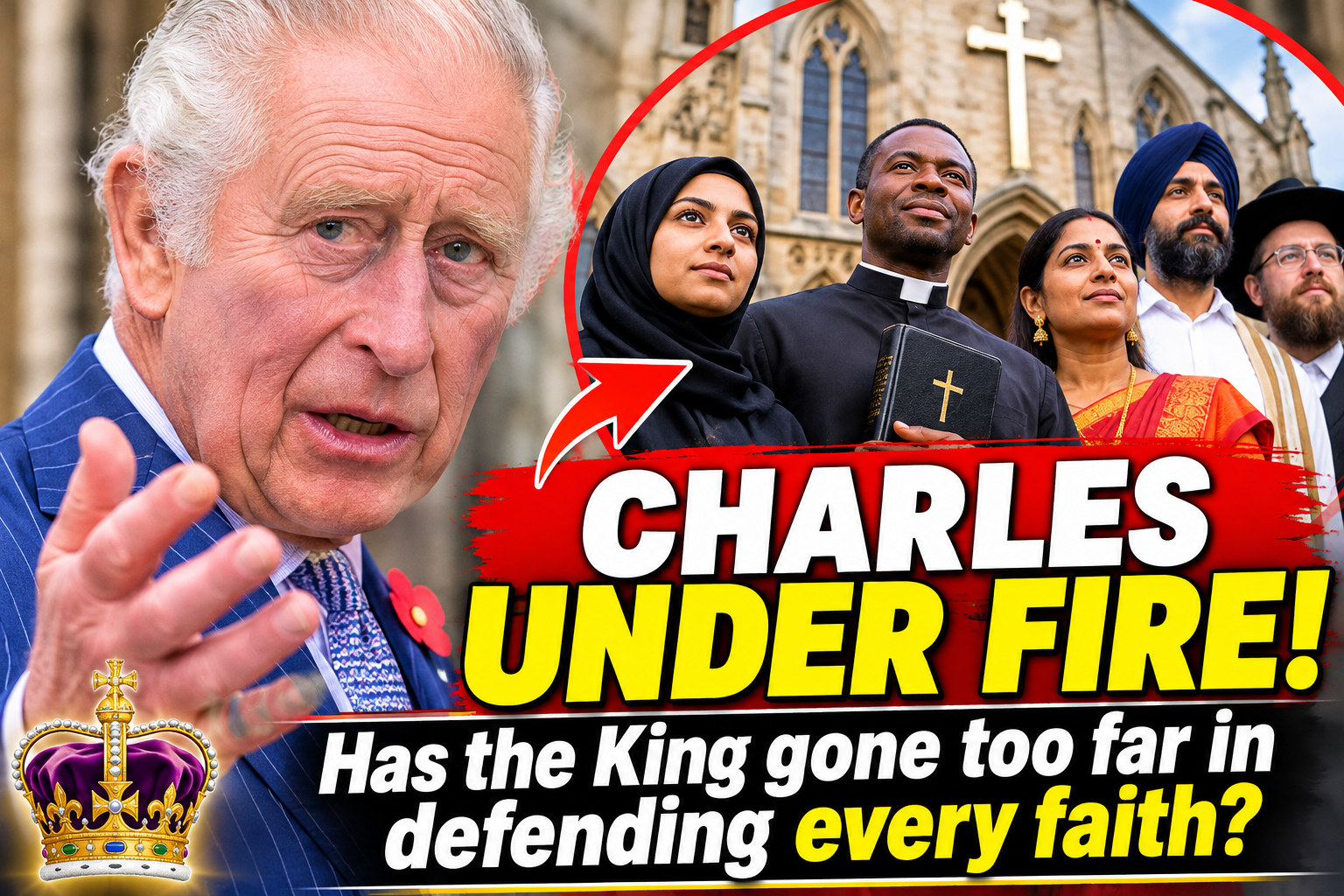
The monarch’s latest remarks have reignited an emotional debate about Britain’s Christian identity, religious tolerance and what it truly means to be Defender of the Faith.
King Charles III has found himself at the centre of a growing religious controversy after making a statement about the Church of England that has attracted criticism from some Christian commentators.
The monarch, who serves as Supreme Governor of the Church of England, believes the established Church has an important responsibility beyond protecting Christianity alone. According to his message, it should also protect the space that allows people of every religious belief to practise their faith freely.
It was a message intended to encourage understanding and unity. However, not everyone has welcomed it.
For some Christians, particularly those who believe the monarchy must remain firmly committed to Britain’s Christian foundations, the King’s words have raised uncomfortable questions. They want to know whether protecting every religion is compatible with the special position Christianity has historically occupied in the United Kingdom.
And as reactions continue to emerge, one thing is becoming increasingly clear: Charles has touched on an issue that goes much deeper than a royal speech.
WHAT EXACTLY DID KING CHARLES SAY?
The controversy followed the King’s address to the newly elected General Synod of the Church of England on November 17, 2026.
Speaking to the assembly, Charles reflected on the importance of Christianity and the role the Church should continue to play in British society.
He explained that the Christian faith provides an important foundation for social cohesion, while recognising that Britain is home to people from many different religious backgrounds.
However, it was one particular statement that attracted considerable attention.
“The Church protects not just the Christian faith of all of us gathered in this room, but the very space for faith itself – of every belief – within our whole society and national discourse,” the King said.
Those words quickly became a talking point among religious commentators.
Although Charles did not specifically mention Islam in that sentence, his reference to every belief naturally includes Muslims, Jews, Hindus, Buddhists and people belonging to other religious communities.
For supporters, this was a powerful reminder that Britain belongs to people of different backgrounds and beliefs.
For critics, however, the statement raises a different question: should the Church of England’s primary responsibility be to protect Christianity or to provide a broader religious umbrella?
WHY SOME CHRISTIANS ARE UNHAPPY
One of the strongest criticisms came from Bishop Ceirion H. Dewar, a missionary bishop associated with the Confessing Anglican Church.
He questioned the idea that the Church should be responsible for protecting every religious belief, arguing that its central purpose should be proclaiming the Christian Gospel.
In his criticism, he distinguished between protecting people’s freedom to practise their religion and suggesting that the Church itself should embrace every religious belief.
His argument was that people deserve dignity, freedom of conscience and protection under the law, regardless of their religion. However, he believes the Church must remain clear about its Christian identity and teachings.
This distinction has become central to the wider discussion.
For critics, religious tolerance should never mean weakening the beliefs and traditions that established the Church of England in the first place.
They also point to the monarch’s historic coronation responsibilities, which include an oath connected to maintaining the Protestant Reformed Religion and the Church of England.
Their concern is not necessarily that people of other religions should receive less protection. Rather, they fear that the special Christian identity of the monarchy and the established Church could gradually become less visible.
BUT IS KING CHARLES TURNING HIS BACK ON CHRISTIANITY?
That is where the discussion becomes particularly interesting.
Despite the criticism, there is little in the King’s latest speech to suggest that he is abandoning his Christian faith.
In fact, Charles spoke positively about Christianity, describing its message of love as essential in a world experiencing uncertainty and anxiety.
He also expressed his hope that members of the General Synod would allow Christian virtues such as justice, mercy, patience, humility and love to guide their work.
The King even highlighted the suffering of Christians facing persecution, violence and displacement around the world, particularly communities in the Middle East and the Holy Land.
He made clear that the Church of England should continue extending its ministry to people throughout the country.
These comments suggest that Charles sees no necessary contradiction between being a committed Anglican Christian and respecting people who follow other religions.
His position appears to be that Christianity can remain at the heart of the established Church while religious freedom is protected for everyone.
Nevertheless, critics are not entirely convinced that the distinction is strong enough.
WHY IS ISLAM PART OF THE DEBATE?
Islam has become part of the public discussion because it is one of the major religions practised in modern Britain.
The country has a substantial Muslim population, alongside Christian communities and people of numerous other faiths.
For a monarch who describes Britain as a diverse society, recognising the freedom of Muslims to practise their religion is consistent with his broader message.
Charles has also demonstrated an interest in interfaith understanding throughout his public life.
However, the discussion surrounding Islam and Christianity can become particularly sensitive because the two religions have different theological beliefs and traditions.
Some Christian critics worry that language about protecting every belief could be misunderstood as suggesting that all religious teachings are interchangeable.
Others argue that respecting Muslims and protecting their religious freedom does not require Christians to compromise their own beliefs.
That is perhaps the most important distinction in this entire controversy.
A country can protect religious freedom without demanding that its religious institutions abandon their individual identities.
THE SHADOW OF QUEEN ELIZABETH II
Another interesting aspect of this debate is the legacy of the late Queen Elizabeth II.
During her reign, Elizabeth repeatedly spoke about the importance of religious tolerance and the Church of England’s role in a diverse society.
In a landmark address in 2012, she explained that the Church’s responsibility was not to exclude other religions but to protect the freedom of people to practise their faith.
Charles’s latest remarks therefore have an important historical connection.
His approach is not entirely new, although the language used has once again brought the issue into the spotlight.
The difference is that Charles is now navigating these questions as King, with the additional responsibility of maintaining the traditions associated with the British Crown.
WHAT DOES THIS MEAN FOR THE FUTURE OF THE MONARCHY?
The controversy raises a bigger question about the direction of the British monarchy.
Charles inherited a centuries-old institution with strong connections to Christianity. At the same time, he became sovereign of a country whose population includes people from different cultures, religions and traditions.
Balancing those responsibilities is not always straightforward.
Some believe the King should place greater emphasis on defending Britain’s Christian heritage, while others welcome his willingness to acknowledge the country’s religious diversity.
There is also the question of what future generations of royals will make of this responsibility.
Prince William will eventually face similar expectations if he becomes King. Whether he approaches the relationship between the monarchy, Christianity and other religions in exactly the same way remains to be seen.
For now, Charles appears determined to defend the Church of England’s Christian foundation while supporting the freedom of other religious communities.
Whether that approach satisfies his critics is another matter entirely.
THE BIG QUESTION: CAN THE KING PROTECT EVERY FAITH WITHOUT WEAKENING CHRISTIANITY?
Ultimately, this controversy is about more than one sentence delivered during a royal address.
It touches on the identity of Britain, the meaning of religious freedom and the responsibility of a monarch who occupies a unique position within the Church of England.
Supporters see Charles as a King attempting to bring people together in a divided society.
His critics, meanwhile, want reassurance that Britain’s Christian foundations will not be pushed into the background in the name of religious inclusivity.
Perhaps the most important question is whether both responsibilities can coexist.
Can the Church of England remain proudly Christian while defending the right of Muslims and people of other religions to practise their beliefs?
And should King Charles be praised for promoting religious understanding, or should he be more careful about how he describes the Church’s historic responsibilities?
One thing is certain: this debate is unlikely to disappear anytime soon.

BREAKING: Kate Middleton Finally Breaks Her Silence on the Type and Stage of Cancer She Had Before Undergoing Chemotherapy, Following the Release of the Trailer for Her Cancer Journey Documentary, “Heal”

Jennifer Lopez, 57, Steals the Spotlight During a Relaxing Beach Escape! Fans Can’t Stop Talking About Her Stunning Look and the Surprising Detail Everyone Seems to Have Missed

Footage of President Trump walking out moments ago is getting HUGE attention, and there’s one detail viewers can’t seem to stop noticing. Watch closely

BREAKING: Frail-Looking Joe Biden Suddenly Collapses at Philadelphia Airport While Making His Way Through the Terminal Ahead of Thanksgiving, Leaving Onlookers Stunned! But What Cameras Captured Moments Before He Was Rushed Away on a Stretcher Has Sparked Widespread Concern, With Many Now Asking ONE Disturbing Question About His Health

BREAKING: President Trump almost got arrested at the 2026 APEC Summit for holding President Putin’s hand for too long and had to be cautioned to release it, but moments after letting go, cameras caught him doing something unusual that a president should never be caught doing, right in front of President Xi, while Putin looked visibly frustrated

Heartbreaking News: Just Minutes Ago, Buckingham Palace Releases a Major Tragic Announcement About King Charles, Leaving Queen Camilla, Prince William and Princess Catherine Devastated as the Entire World Are in Disbelief

BREAKING: Donald Trump caught with a strange mould in his mouth at his golf club while watching Fox News, as his aide Natalie Harp slyly adjusts his pants beside him

BREAKING: Pregnant Brittany Mahomes Suddenly Collapses at Arrowhead Stadium During the Chiefs vs. Cardinals Game, Leaving Patrick Mahomes Rushing to Her Side as Fans Watch in Shock, But What Cameras Capture Moments Later Sparks Even More Concern and Has Football Fans Asking Serious Questions About What Really Happened

🚨😱BREAKING: DONALD TRUMP REPORTEDLY COLLAPSES AFTER A TERRIFYING COUGHING EPISODE IN HIS OFFICE FOLLOWING HIS HIGH-PROFILE MEETING WITH CHINA’S PRESIDENT! An Urgent Hospital Rush Sparks Major Speculation, But What Doctors Allegedly Discover Leaves Everyone Waiting for Answers… Only for Doctors to Confirm That He’s…

BREAKING: King Charles Looks Completely Furious, Visibly Screaming at Queen Camilla as They Leave the Royal Albert Hall Following the 2026 Royal Variety Performance! But What Cameras Captured During Their Tense Exchange Has Left Royal Fans Stunned, Raising Serious Questions About What Really Happened Behind Palace Doors.

🚨😱 JUST IN: DONALD TRUMP SPARKS CONTROVERSY After Embarrassing Himself in Diaper-Related Incident During a Private Presidential Suite Encounter With Aide Natalie Harp! But It’s One Unexpected Detail Revealed in Another Camera Angle That Has everyone Talking and some American calls for his immediate resignation
